![[personal profile]](https://www.dreamwidth.org/img/silk/identity/user.png)
Reading Wednesday
Aug. 31st, 2016 02:59 pmWhat did you just finish?
Shaman by Kim Stanley Robinson. A novel set in Europe during the Ice Age (I'd guess France sometime in the Aurignacian, between 40,000 and 30,000 years ago, but unsurprisingly such specific labels and dates are not actually used in the book itself). There's not much of plot; Loon, the main character, is a young man unwillingly apprenticed to his tribe's shaman, though not so unwillingly as to run away, who goes about his day to day life without many upheavals. In fact, there's so few upheavals – so little plot – that I suspect that's the book's greatest flaw.
The opening section is a particularly great example of this: Loon is sent out on a sort of vision quest/adulthood ritual, in which he is left alone, naked, and without tools or weapons, and expected to survive for the next two weeks. I am fine with this as a plausible human practice in the Upper Paleolithic. It does mean, however, that the reader spends the first sixty pages with no characters other than Loon, and therefore no dialogue, no real characterization of Loon himself (since he has no one to interact with or react to, it's hard to get a sense of his personality), and no goals beyond "wait two weeks". Things thankfully pick up once Loon returns to his tribe, but that's a hell of a high barrier to get into the book.
Of course, I suspect the point of the book, for Robinson, is not plot. As always, he's focused on the small details of how people live, and particularly how they interact with their environment. This means that there's lots and lots of attention paid to how to make fire from sticks, how to hunt with spears on foot, how to store enough food for a long winter, how to build houses, how to knap stone, how to travel, etc. All of it seemed well-researched and accurate to the extent of my knowledge, though of course a fiction writer has demands that an archaeologist doesn't: if there's two competing theories, a writer has to choose one and go with it, or even make up answers to those questions for which evidence simply doesn't exist. I was happy with the choices Robinson made. At least Loon, unlike Ayla of Clan of the Cave Bear, is not responsible for every single human invention of the Upper Paleolithic; he confines himself to a single slight improvement of snowshoes.
It was a good book, though one with a slow pace, focused on the turn of the seasons and Loon's slow growth into adulthood and acceptance of his place as a shaman. I'm a huge fan of Kim Stanley Robinson, but unfortunately I can't say this was my favorite of his books.
Anyway. Here are some links to real stuff that is referenced in the book (at least, the real stuff that I noticed), in case anyone is interested:
Loon's lion-man carving
Thorn's painting of the lion hunt
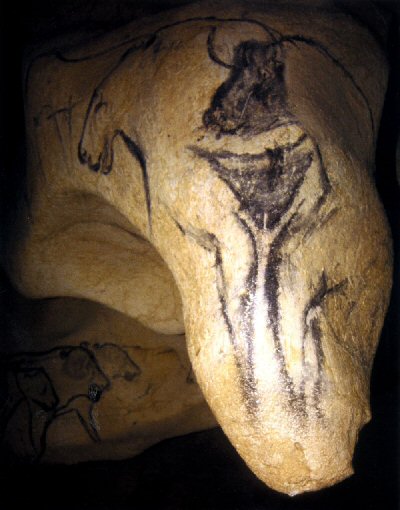
The older bison and woman painting
Loon's painting of four horses and rhinos fighting
Loon's painting of Thorn as symbolized by a bison with red handprints
(There's a bit of discrepancy here, as all of these paintings are indeed from a single cave – Chauvet, in France – while the lion-man is between 3,000 and 10,000 years earlier, and was over in Germany, but ah well. Upper Paleolithic fiction is probably always going to have these sorts of condensed timelines.)
A City Dreaming by Daniel Polansky. A novel about one year in New York City, a single year in the life of M, a magic-user. Or, as he prefers to call himself, someone who's "in good with the Management".
This is urban fantasy as told by a disaffected hipster. We learn extremely little about M – what he looks like, how old he is, how old he appears to be, what race he is, where he's from, etc; I'm not sure I'd even know that he's a "he" if the book hadn't been told in third-person. He doesn't have much of a personality either. He's aggressively not ambitious; enjoys craft beer, women, books, and drugs; and prefers to avoid doing work. In the book's vignettes he's frequently faced with what appears to be a grievous threat, and escapes with quick thinking and big talking but little actual magic. Outside of that I couldn't tell you much about him.
In addition to not really having a main character, the book doesn't really have a plot. It's structured like a series of short stories rather than a novel. At first these vignettes seem entirely disconnected from one another, which makes them hard to sink into, but gradually side-characters make repeat appearances, themes recur, and the last two chapters even manage to tie together multiple previous plots.
The real appeal of the book is its vision of a magical New York just outside of the awareness of regular people. Here we have the pirates of the Gowanus Canal, subways trains to hell, constantly multiplying coffee shops owned by a transdimensional corporation, fantastical drugs taken in Williamsburg warehouse parties, a group of people in finance bumbling through a human sacrifice during a long weekend in the Hamptons, the Park Manager – the deity who makes all the city's parks grow – on a night-long quest for Cronuts, and so on. It's mostly amusingly creative, though the story of an abandoned haunted house in Brooklyn Heights was genuinely creepy and quite dark. To be honest though, I'm not sure how amusing it would be to someone who doesn't live in NYC. I suspect jokes about the Z train or the Spiderman musical have a very short distance they can travel before they instead become pretentious and insular.
A fun book with a multitude of neat ideas, but which I wish had been hung on a stronger set of characters and plot.
I read this as an ARC via NetGalley.
What are you currently reading?
Burning Bright by Melissa McShane. A Regency-set fantasy, about a young gentlewoman with the power to control fire who joins the Navy. Regency fantasy seems to be a popular subgenre lately, which I am all for.
Shaman by Kim Stanley Robinson. A novel set in Europe during the Ice Age (I'd guess France sometime in the Aurignacian, between 40,000 and 30,000 years ago, but unsurprisingly such specific labels and dates are not actually used in the book itself). There's not much of plot; Loon, the main character, is a young man unwillingly apprenticed to his tribe's shaman, though not so unwillingly as to run away, who goes about his day to day life without many upheavals. In fact, there's so few upheavals – so little plot – that I suspect that's the book's greatest flaw.
The opening section is a particularly great example of this: Loon is sent out on a sort of vision quest/adulthood ritual, in which he is left alone, naked, and without tools or weapons, and expected to survive for the next two weeks. I am fine with this as a plausible human practice in the Upper Paleolithic. It does mean, however, that the reader spends the first sixty pages with no characters other than Loon, and therefore no dialogue, no real characterization of Loon himself (since he has no one to interact with or react to, it's hard to get a sense of his personality), and no goals beyond "wait two weeks". Things thankfully pick up once Loon returns to his tribe, but that's a hell of a high barrier to get into the book.
Of course, I suspect the point of the book, for Robinson, is not plot. As always, he's focused on the small details of how people live, and particularly how they interact with their environment. This means that there's lots and lots of attention paid to how to make fire from sticks, how to hunt with spears on foot, how to store enough food for a long winter, how to build houses, how to knap stone, how to travel, etc. All of it seemed well-researched and accurate to the extent of my knowledge, though of course a fiction writer has demands that an archaeologist doesn't: if there's two competing theories, a writer has to choose one and go with it, or even make up answers to those questions for which evidence simply doesn't exist. I was happy with the choices Robinson made. At least Loon, unlike Ayla of Clan of the Cave Bear, is not responsible for every single human invention of the Upper Paleolithic; he confines himself to a single slight improvement of snowshoes.
It was a good book, though one with a slow pace, focused on the turn of the seasons and Loon's slow growth into adulthood and acceptance of his place as a shaman. I'm a huge fan of Kim Stanley Robinson, but unfortunately I can't say this was my favorite of his books.
Anyway. Here are some links to real stuff that is referenced in the book (at least, the real stuff that I noticed), in case anyone is interested:
Loon's lion-man carving
Thorn's painting of the lion hunt
The older bison and woman painting
Loon's painting of four horses and rhinos fighting
Loon's painting of Thorn as symbolized by a bison with red handprints
(There's a bit of discrepancy here, as all of these paintings are indeed from a single cave – Chauvet, in France – while the lion-man is between 3,000 and 10,000 years earlier, and was over in Germany, but ah well. Upper Paleolithic fiction is probably always going to have these sorts of condensed timelines.)
A City Dreaming by Daniel Polansky. A novel about one year in New York City, a single year in the life of M, a magic-user. Or, as he prefers to call himself, someone who's "in good with the Management".
This is urban fantasy as told by a disaffected hipster. We learn extremely little about M – what he looks like, how old he is, how old he appears to be, what race he is, where he's from, etc; I'm not sure I'd even know that he's a "he" if the book hadn't been told in third-person. He doesn't have much of a personality either. He's aggressively not ambitious; enjoys craft beer, women, books, and drugs; and prefers to avoid doing work. In the book's vignettes he's frequently faced with what appears to be a grievous threat, and escapes with quick thinking and big talking but little actual magic. Outside of that I couldn't tell you much about him.
In addition to not really having a main character, the book doesn't really have a plot. It's structured like a series of short stories rather than a novel. At first these vignettes seem entirely disconnected from one another, which makes them hard to sink into, but gradually side-characters make repeat appearances, themes recur, and the last two chapters even manage to tie together multiple previous plots.
The real appeal of the book is its vision of a magical New York just outside of the awareness of regular people. Here we have the pirates of the Gowanus Canal, subways trains to hell, constantly multiplying coffee shops owned by a transdimensional corporation, fantastical drugs taken in Williamsburg warehouse parties, a group of people in finance bumbling through a human sacrifice during a long weekend in the Hamptons, the Park Manager – the deity who makes all the city's parks grow – on a night-long quest for Cronuts, and so on. It's mostly amusingly creative, though the story of an abandoned haunted house in Brooklyn Heights was genuinely creepy and quite dark. To be honest though, I'm not sure how amusing it would be to someone who doesn't live in NYC. I suspect jokes about the Z train or the Spiderman musical have a very short distance they can travel before they instead become pretentious and insular.
A fun book with a multitude of neat ideas, but which I wish had been hung on a stronger set of characters and plot.
I read this as an ARC via NetGalley.
What are you currently reading?
Burning Bright by Melissa McShane. A Regency-set fantasy, about a young gentlewoman with the power to control fire who joins the Navy. Regency fantasy seems to be a popular subgenre lately, which I am all for.


aurochshorsesandrhinocerosesinthecaveatchauvet(wallpaintings)1323909580977.jpg)
